The Right Day Job for Illustrators: Finding Work That Supports Your Creative Career
This article was written in collaboration with Gunda Menkhaus, whose insights and contributions helped shape the piece.
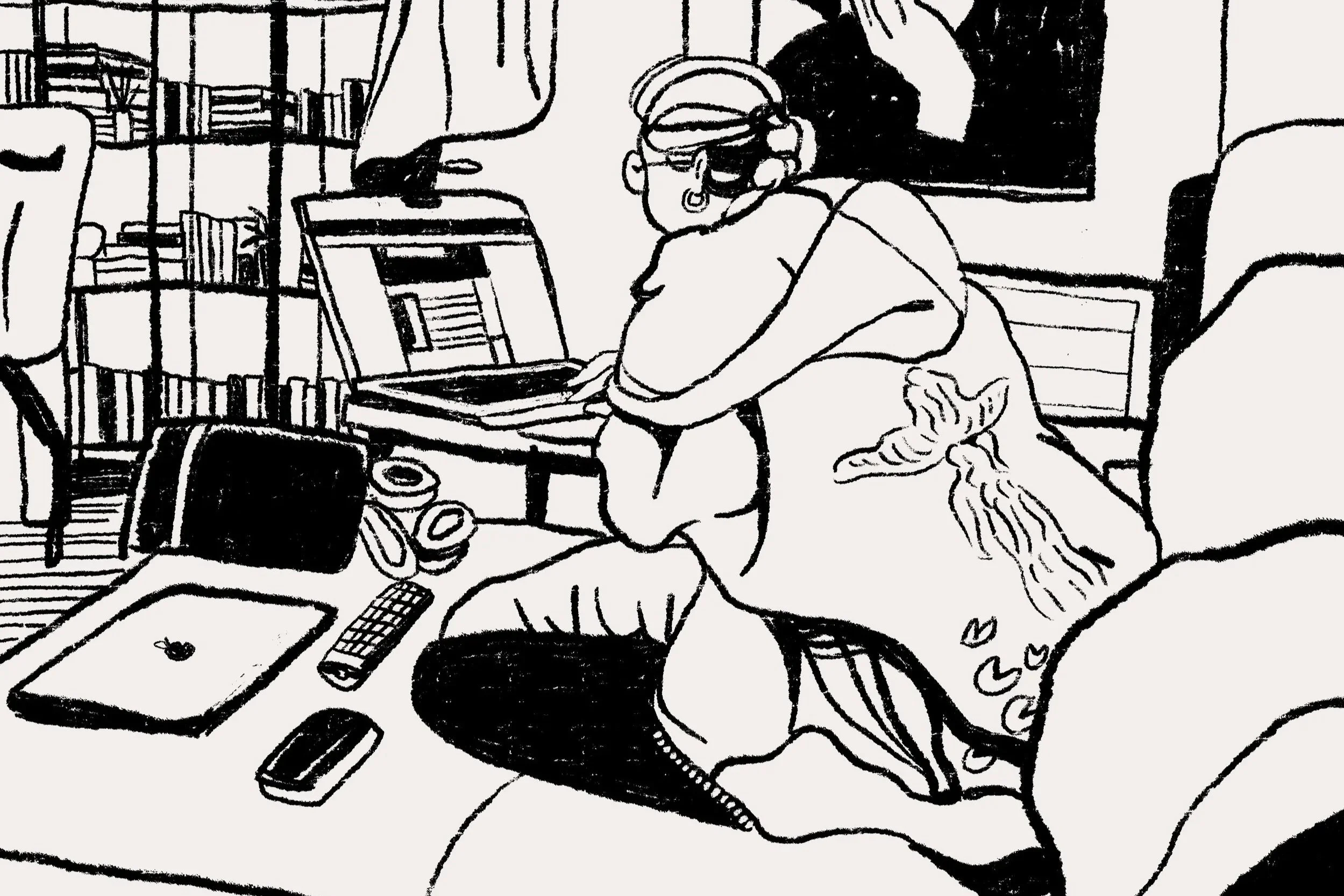
For anyone who has realised that a day job can meaningfully support their development as an illustrator, a practical question eventually arises: What kind of job is actually the right one? Many people hope for a simple answer. Ideally, it would be a job that is enjoyable, provides enough income, offers flexibility and still leaves plenty of room for illustration. In reality, however, finding the right balance is often more complicated.
Not every job creates the conditions you need to develop as an illustrator. Some positions offer freedom and financial security while others take up so much time and energy that there is hardly anything left for creative work. This is why it is worth taking a closer look at the different possibilities and thinking carefully about which kind of work can support your creative goals in the long run.
2. What Matters When Choosing a Job
When people think about finding the right job, they often focus first on the industry itself. Many aspiring illustrators wonder whether working in the creative industry is the better choice or whether a completely different type of job could make more sense. What is easily overlooked, however, is that your development as an illustrator often depends less on the industry you work in and much more on the conditions under which you work.
The working conditions are often what really matter. It is important to ask yourself whether you have enough time for personal projects, whether your daily routine can be planned reliably and whether you still have enough energy for creative work after your working day is over. These factors can have a much greater influence on your progress than the job title or the industry itself.
Your priorities may also change over time. Financial security might be your main focus today while in a few years you may want more flexibility. You might eventually reduce your working hours because illustration starts to make up a larger part of your income. What feels like the right decision today does not necessarily have to remain the best solution forever.
Letting go of the idea that you need to find the perfect solution immediately can take away a lot of pressure. Instead of searching for one universally ideal job, it makes more sense to honestly assess your own situation and think about what you personally need at this stage of your life. Not every job suits every person and that is completely fine.
With this perspective, the question changes. It is no longer about which job is generally better but about which path supports you personally in the best possible way.
3. A Creative Job or Something Completely Different? Both Can Work
At this point, many aspiring illustrators face an important question. Should your day job be related to illustration, design or advertising or could a job in a completely different field actually be the better choice?
At first glance, working in a creative environment may seem like the obvious answer. A job in this field can offer many opportunities because you get to know professional processes, gain experience working with clients and get insights into projects that may later become valuable for your freelance career. You can also build connections with people who work in the same industry and learn from the way creative projects are developed and managed.
However, this option also has its downsides. If you spend the entire day doing creative work, you may find that there is little creative energy left for your own illustrations in the evening. You might still have plenty of ideas but lack the concentration to continue working on personal projects. This can become particularly challenging because personal work plays an important role in developing your portfolio and showing the kind of illustration work you really want to be hired for.
That is why a job outside the creative industry is often underestimated. Even if your work has nothing to do with illustration at first glance, this clear separation can actually be a major advantage. During the day, you focus on completely different tasks and after work a new part of the day begins where illustration has its own dedicated place. Many creative people find this change refreshing because they can return to their desk with new energy and a clearer mind.
There is also another aspect that often becomes more apparent over time. Good illustrations do not come from drawing skills alone. They are shaped by observations, stories and an understanding of people. Every job gives you insights into different worlds and conversations with colleagues, encounters with customers or everyday situations can all broaden the way you see the world.
Often, these experiences are exactly what later make characters feel more believable or give an illustration greater depth. Inspiration does not only come from other artists or creative projects. It can also come from the people you meet and the experiences you have outside your creative work.
That is why there is no universal answer to this question. Whether a job in the creative industry or a completely different field is better for you depends entirely on your personal situation. What matters most are the working conditions that allow you to continue developing your illustration and finding a balance that works for your life.
But even after finding the right type of job, there is another important decision to make. It is not only about where you work but also about how you work. Full-time, part-time and remote work can all affect your everyday life and creative development in very different ways.
4. Which Working Model Fits Your Life?
Once you have decided that a day job should be part of your journey, another question becomes important. It is not only the job itself that shapes your everyday life but also the way you work. Full-time, part-time and remote work all come with very different conditions and which option makes sense depends less on general recommendations and much more on your personal situation.
A full-time job offers something many people value: financial security. A regular income creates stability and removes a large part of the financial pressure that can come with building a freelance career. At the same time, there is often less time and energy left for illustration after a long working day. This does not mean that creative development becomes impossible but it may happen more slowly and require better planning.
If you choose this path, it is important to realistically assess how much energy you actually have left for personal projects after work. Having a few hours available in theory does not always mean that you have the concentration or motivation to use them creatively. Finding a sustainable routine can therefore be more important than trying to work on your illustration every single evening.
A part-time job can offer an interesting middle ground for many illustrators. It combines a regular income with dedicated time that can be consciously used for creative work. Especially during the early stages of building a freelance career, this model can create a great deal of stability because it allows you to take on your first client projects, continuously develop your portfolio and still maintain a certain level of financial security.
Of course, working fewer hours often also means earning less money. In return, however, it can create the freedom needed to build a creative career over the long term. Having regular time available for your illustration can make it easier to work consistently and gradually turn your creative work into a larger part of your professional life.
Remote work has also become increasingly important in many professions. At first glance, it may seem like the ideal solution because there is no commute, your day can often be organised more flexibly and switching between your job and illustration may appear relatively easy. At the same time, working from home can bring its own challenges because the boundaries between work and free time can easily become blurred and your workspace can quickly become the centre of your entire day.
There is another aspect that is often underestimated. Creativity does not only happen at your desk. It is shaped by encounters, conversations and the small observations of everyday life. If you work alone most of the time, you may miss out on many of these impressions. Remote work can still work extremely well but it is worth making sure that you consciously maintain enough contact and exchange with other people because these encounters can become a valuable source of new ideas and inspiration.
No matter which working model you choose, there is no universal solution. Some people gain energy from a quiet working environment while others need regular contact with colleagues. The important thing is to honestly understand your own needs and choose a working situation that supports your creative development instead of constantly holding it back.
In the end, your progress is not determined by the number of hours you work alone. Often, what matters most is the energy you still have left afterwards and this may be one of the most important criteria when choosing a job that fits your path as an illustrator.
5. How to Recognise a Good Day Job
After looking at different industries and working models, the most important question remains: How can you tell whether a day job actually supports your development as an illustrator?
The answer often lies less in the job itself and more in the conditions surrounding it. A good job provides financial security without completely taking over your life. It fits your personal situation and creates enough space for you to continue developing your illustration consistently. Finding this balance is what can make a job valuable in the long run.
One important factor is predictability. Creative projects rarely happen successfully between spontaneous appointments or after unexpected overtime. If you have reliable working hours, you can plan regular time for illustration and make much more consistent progress with your own projects. Your progress is not necessarily determined by the number of free hours you have but by your ability to work creatively on a regular basis.
A certain degree of flexibility can also be important. No employer has to organise their business around your illustration career but some workplaces are more understanding when it comes to personal projects or occasionally adjusting schedules. Especially while you are building your career, this can be a major advantage.
Perhaps an exciting project comes up unexpectedly or you need time for an important conversation with a client. In those moments, it can be reassuring to know that both parts of your professional life can work alongside each other.
Your working environment also deserves attention. Respectful colleagues, reliable people and a positive atmosphere may seem like obvious things to look for but they often have a significant impact on how you feel when you return home. If you spend your entire working day under pressure or surrounded by conflict, you will often carry that stress into your evening and this can make it much more difficult to find the energy for your own creative projects.
A good working environment may not give you more time but it can help preserve the energy and motivation you need for your illustration. The right job therefore does not have to be spectacular or perfect. It is a good choice if it gives you the opportunity to continuously develop your illustration and move step by step towards your long-term goals.
6. Final Thoughts
Many aspiring illustrators spend a long time searching for the ideal professional solution. Over time, however, it often becomes clear that there is rarely one perfect path. What works perfectly for one person may not work at all for someone else because every life situation is different and everyone has to find their own way.
What matters is not the job title itself but whether your work gives you the opportunity to continue developing as an illustrator. It should provide security without limiting your creativity and leave enough space for your personal projects to grow.
Your professional situation may also change over time and that is completely normal. With every new experience, your goals, opportunities and priorities can change and your professional path is allowed to change with them.
In the end, it is not about making the perfect decision. What matters is choosing a job that supports you today and gives you the opportunity to continue following your own path as an illustrator with confidence and enjoyment.
If you're wondering why having a day job can actually be good for you as an illustrator, take a look at my article Why Having a Day Job Can Help Your Illustration Career.