Why Having a Day Job Can Help Your Illustration Career
This article was written in collaboration with Gunda Menkhaus, whose insights and contributions helped shape the piece.
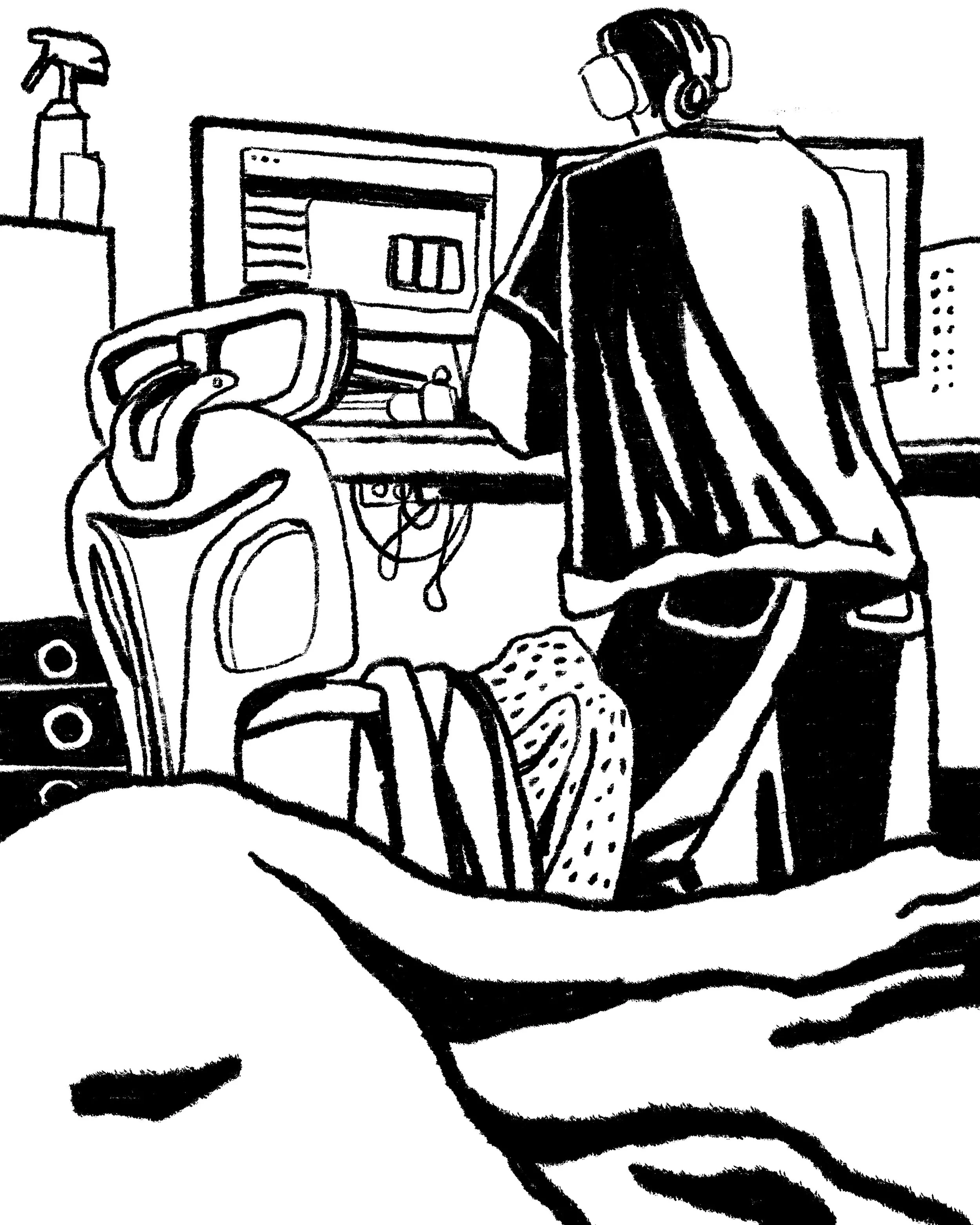
If you want to become an illustrator, you probably dream of reaching the point where you can make a living entirely from your creative work. But there is one stage along the way that people rarely talk about: having a day job.
Many creatives see their day job as an obstacle or even as a sign that they haven’t made it yet. But the opposite can actually be true. A day job can provide the foundation on which you gradually build a successful career as an illustrator. This isn’t about giving up on the dream of becoming a full-time freelance illustrator. It’s about giving that dream the time it needs to grow sustainably.
1. Financial Security Creates Creative Freedom
Money is one of those topics creatives rarely like to talk about. Yet your financial situation often determines how freely you can actually work. If you’re under pressure every month to pay rent and cover your bills, your decisions are rarely based purely on creative reasons. Financial survival quickly becomes the priority. Suddenly, you find yourself accepting every project that comes your way even if the fee barely covers your time or the project doesn’t really match your interests.
This is exactly where a day job can make a huge difference. If your basic living expenses are already covered, you gain the freedom to choose projects because you genuinely want to work on them rather than because you desperately need the money. You can focus on projects that fit your style, strengthen your portfolio and potentially open new doors in the future.
If you’re constantly wondering whether the next commission will arrive in time or whether you’ll earn enough to get through the coming month, there isn’t much space left for creative experimentation. Ideas need time. Good illustrations rarely emerge from the feeling that you have to produce something immediately. Another important factor is quality. If you don’t have to accept every commission, you can spend more time on your work, experiment with new techniques and continue developing your own visual language. Often, the personal illustrations created during these quieter periods are exactly the pieces that later attract new clients.
A day job doesn’t just pay the bills. It can finance the freedom to make better decisions and allow your creative development to exist without constantly being dictated by financial worries. That is where its real value lies.
2. Success Takes Time, Not Pressure
Many aspiring illustrators put enormous pressure on themselves. They want to make a living from their creative work as quickly as possible, preferably within a few months. When those first big successes don’t happen immediately, it’s easy to start doubting your own abilities. What is often forgotten is that building a freelance career rarely happens overnight.
A portfolio doesn’t develop overnight either. You create new work, remove older illustrations and gradually refine your style with every piece you make. Finding your first clients, receiving recommendations and building long-term professional relationships all take time.
When you’re constantly under pressure to make money as quickly as possible, it’s easy to make short-term decisions. You might accept commissions that you don’t enjoy and that don’t add anything meaningful to your portfolio. In the worst case, there is barely any time left for personal projects even though those are often the projects that convince new clients to hire you. Having a day job gives you the opportunity to make more deliberate decisions. You don’t have to accept every enquiry. You can invest time in a personal illustration without immediately having to think about its financial value.
In the long run, this approach can pay off. A carefully developed portfolio, a recognizable style and strong relationships with satisfied clients aren’t built through rushing. They’re built through consistency. A day job doesn’t necessarily slow down your creative career. It can give you the space to develop it in a healthy way. Sustainable success is rarely a sprint. More often, it grows step by step through patience, experience and the freedom to consciously choose your own path.
3. A Day Job Can Do More Than Pay the Bills
A day job doesn’t only provide financial security. It can also teach you things that later become surprisingly valuable in your work as an illustrator. Often, it’s exactly the skills that seem unrelated to drawing that make a difference in the long run.
If you regularly work with other people, you develop a better understanding of communication, different personalities and different perspectives. This isn’t only useful in everyday working life. It also helps enormously when dealing with clients. After all, working as an illustrator isn’t just about the creative process. You need to understand what clients want, discuss projects and sometimes accept constructive criticism. If you’ve already learned how to communicate openly and professionally, you have a valuable foundation to build on.
Organizational skills are another thing you often develop almost automatically in a day job. Coordinating schedules, setting priorities, taking responsibility and working reliably as part of a team are all skills that become equally important when you’re self-employed. Many aspiring illustrators underestimate this part of the profession. The quality of your illustrations isn’t the only thing that determines whether you’ll have a successful career. Being reliable, meeting deadlines and simply being pleasant and professional to work with are just as important.
Some of the most valuable practical skills are things you only really learn once you start working professionally. There is much more to building a creative career than simply becoming better at drawing. I wrote more about this in 10 Things They Don’t Teach You in Illustration School.
A day job can also become an unexpected source of inspiration. In everyday life, we meet people with completely different backgrounds, professions and interests. Conversations, small observations and unusual situations often stay somewhere in our memory and eventually find their way into our illustrations. Creativity doesn’t only happen at your desk. It grows from the experiences we collect and the way we observe the world around us.
Finally, a day job can introduce you to new people. This doesn’t mean you should constantly be looking for potential clients at work. It’s simply valuable for people to know what you do. Recommendations often come from places you would never expect. A former colleague, customer or acquaintance might remember months later that you’re an illustrator and suddenly make an introduction that leads to an interesting opportunity.
Having a day job doesn’t mean putting your creative development on hold. Quite the opposite. It can help you develop useful skills, discover new perspectives and gain experiences that naturally become part of your work as an illustrator. Often, you only realize in hindsight how much those experiences contributed to your creative path.
4. Finding the Right Balance Between Your Day Job and Illustration
Having a day job comes with many advantages. At the same time, it creates one unavoidable challenge: there are only twenty-four hours in a day. After work, there is often much less time left for illustration than you would like. That’s why finding the right balance is so important.
Many aspiring illustrators make the mistake of trying to use every free minute productively. They draw after work, create new portfolio pieces at the weekend and somehow try to keep up with social media, emails and administrative tasks in between. For a while, this can work. But over time, it can become exhausting.
Creativity needs rest. If you constantly feel that every free hour has to be productive, you risk losing the very thing that made you want to draw in the first place: the joy of creating. Gradually, something you once loved can start to feel like another obligation. Even exciting illustration projects can eventually become just another item on your daily to-do list.
The reality is that life as an illustrator is rarely consistent. There will be periods when only a few commissions come in and you have plenty of space for personal projects. But there may also be moments when several exciting enquiries suddenly arrive at the same time. A small commission might develop into a much larger project or a new client might want to work with you on short notice. Those busy periods are a good sign. They show that people are discovering your work and that the time you’ve invested is beginning to pay off.
Of course, this sometimes means putting in extra effort for a limited period of time. You might spend a few evenings working late or use an entire weekend to meet an important deadline. That’s part of freelance creative work and it’s nothing unusual. What matters is that these intense periods remain temporary and are consciously followed by quieter ones.
Allowing yourself to recover after a demanding period doesn’t only protect your health. It also protects your creativity. New ideas rarely appear when you’re constantly exhausted. They need space, distance and sometimes simply an evening when you leave the pencil untouched. Sometimes, taking a break is exactly what you need to find your motivation again. And if getting back into drawing still feels difficult, there are a few simple ways to make that first step easier. I wrote about them in How to Start Drawing When You Feel Stuck.
Your day job should support your creative development and not become an additional burden. If you learn to manage your energy and accept that there will be both intense and quieter periods, you create much better conditions for enjoying your career as an illustrator in the long term. That’s what balance really means: not trying to do everything perfectly at the same time but building your own path step by step.
5. Final Thoughts
There is rarely a straight path into a freelance creative career. Behind many successful illustrators are years of learning, experimenting and growing. The difference isn’t always who reaches the goal fastest. Often, it’s who is willing to keep going consistently.
Maybe thinking about it this way can also change how you see your day job. It gives you financial security, gives your creative career time to develop and allows you to make decisions calmly rather than out of financial pressure. At the same time, you gain experience, meet people and develop skills that can ultimately enrich your work as an illustrator.
So don’t let the seemingly effortless success stories you see on social media discourage you. Behind most creative careers are countless hours of practice, setbacks, doubts and small obstacles that nobody sees from the outside. All of those things are part of the process.
You don’t suddenly become an illustrator on the day you quit your day job. You’re an illustrator because you take your creativity seriously, continue developing your skills and keep pursuing your dream despite the challenges along the way.
Maybe your day job isn’t the obstacle standing between you and the career you want. Maybe it’s the stable foundation that allows your future as an illustrator to grow. Sometimes, that foundation is one of the most important building blocks for the success you’re working towards.