What size should a sketchbook be? This is something I struggled with for a long time. I kept trying to find a format that felt right for me. Having plenty of space to draw is great. But a sketchbook also needs to be easy to carry and fit into everyday life.
I started with A3. Since then, my sketchbooks have gradually become smaller. Recently, I even bought an A6 sketchbook. Portability has become increasingly important to me. I want to be able to put a sketchbook in my bag and have it with me whenever something catches my attention or an idea comes to mind.
There is something else I find interesting about smaller formats: a small page encourages me to reduce an idea to its essentials. That has become a good reason for me to choose a smaller sketchbook.
A3 Sketchbooks: Where I Started
A3 gives you a lot of space. You can draw freely, put several studies next to each other and explore details without immediately reaching the edge of the page. If you enjoy drawing with your whole arm, that extra room can feel particularly comfortable.
This was the format I started with. Over time, though, being able to take my sketchbook with me became more important. A large book takes up space in your bag and needs room when you open it. That usually is not a problem at a desk. Outside, it can be a different story.
A3 can be a great choice for larger studies or drawing sessions in a studio. For my everyday needs, I gradually found myself wanting something smaller.
That is why I would look beyond the size of the drawing surface when choosing a sketchbook. An equally important question is: Will I actually take this sketchbook with me and use it?

If you enjoy drawing outdoors but sometimes feel uncomfortable with strangers watching you, I’ve written an article that might help: How to Overcome Fear of Drawing in Public
A4 Sketchbooks: Room for Detailed Drawings
A4 still gives you plenty of space for detailed studies, larger scenes and multiple drawings on one page. It is more manageable than A3 while leaving room for broader movements.
This can be helpful if you enjoy adding details or letting a drawing grow as you work. You have more freedom to develop a scene without having to squeeze everything into a small area.
An A4 sketchbook still needs a reasonably spacious bag and somewhere comfortable to draw. For me, the deciding factor would be whether I am going somewhere specifically to draw or simply want to bring a sketchbook along.
When drawing is the purpose of the trip, a larger format is easier to plan around. If I just want a sketchbook with me throughout the day, portability becomes more important.
A5 Sketchbooks: My Recommendation for Urban Sketching
For urban sketching, A5 would be my recommendation as a versatile everyday format. It offers a good balance: it is easy to carry while still leaving enough room for details.
That combination is particularly useful when drawing a building, a street corner or a busy café. The book does not take up too much space in your bag and the page is large enough to capture smaller observations alongside the main shapes.
If your sketchbook opens flat, you can also use a full double-page spread. This gives you extra room for wider street scenes or landscapes.
If you want to spend time drawing a scene on location, A5 is a practical choice. It is also the size I would suggest if you are not yet sure which format suits you. As you use it, you will soon notice whether you want more drawing space or something even more compact.
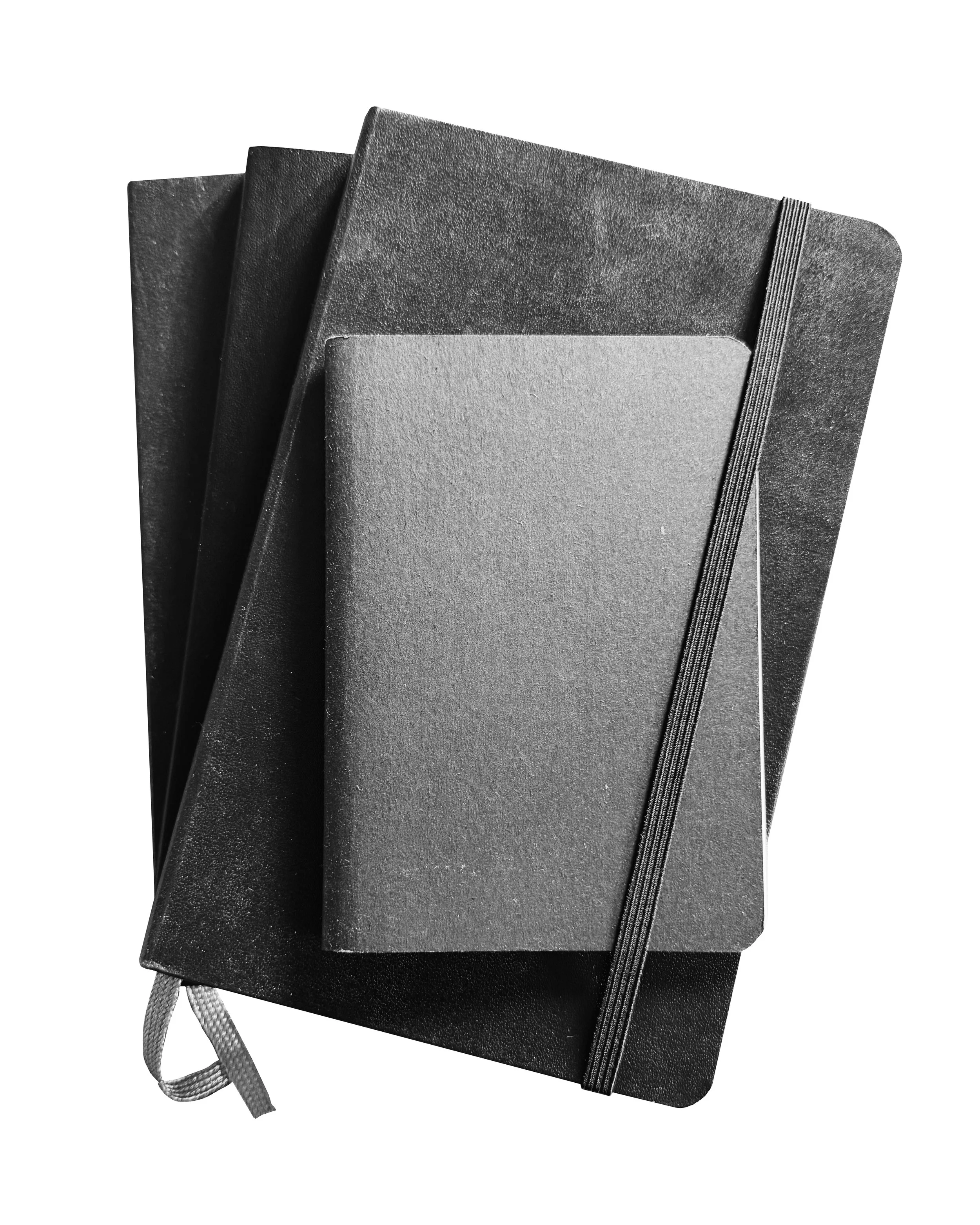
Personally, I think an A5 sketchbook is the best choice for urban sketching because it offers the perfect balance between portability and enough space for details.
A6 Sketchbooks: Why I Recently Went Smaller
My newest sketchbook is A6. It is considerably smaller than the format I started with and easy to take along.
The main reason is portability. I do not want to spend much time thinking about whether my sketchbook will fit in my bag or feel too bulky for a short trip.
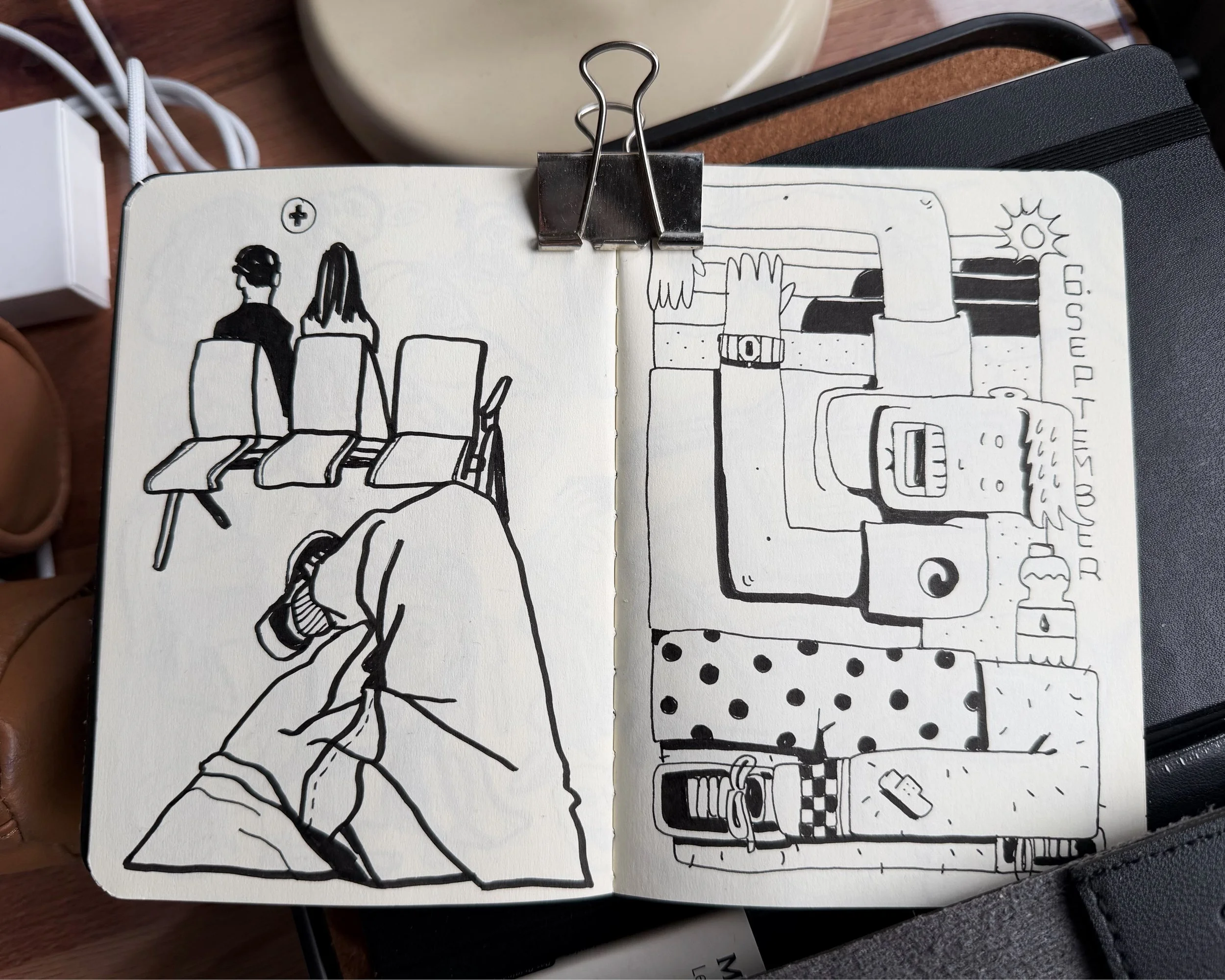
I also do not always need a lot of space for quick observations and early ideas. A small drawing can be enough to capture a situation, a shape or an illustration concept. I do not need to fully develop it in that moment.
For a detailed scene, this format would probably feel too cramped for me. But for collecting and developing ideas, I find the limitation interesting.
How Small Sketchbooks Help Me Simplify Ideas
When I draw an idea on a small page, I have to decide what really matters. Which elements does the image need? Which shapes need to be recognisable? What can I leave out?
I find this especially useful for illustration ideas. On a large page, it is easy to start focusing on details. In a smaller space, the basic composition and the message become more important.
Does the idea already work with just a few lines? Can someone understand what it is about? Or does the arrangement need to be clearer?
For me, a small sketchbook is also a place where ideas can stay unfinished. A sketch does not have to become a polished image. It can simply be an initial thought that I develop later.
Sketchbook Size Is Not the Only Thing That Matters
Alongside the format, I would always check how easily a sketchbook opens. A book that keeps closing or has pages that curve strongly near the spine can get in the way. A binding that allows the pages to lie flat is especially useful for drawing across a spread.
A hardcover can also help when drawing outside because it provides support beneath the page. Spiral-bound sketchbooks often let you fold the pages all the way back, although the spiral sits between the two pages of a spread.
The paper should also suit your tools. Someone drawing with a pencil will have different needs from someone using watercolours or markers. I would choose a sketchbook based on both its size and what I want to do with it.
Which Sketchbook Size Is Right for You?
My recommendation mainly depends on how you want to use your sketchbook:
A3: For larger drawings and studies, especially when working at a desk or in a studio.
A4: For detailed studies and larger scenes when you want extra drawing space in a more manageable format.
A5: My recommendation for urban sketching, with a good balance between portability and room for details.
A6: For spontaneous ideas, simplified sketches and easy portability.
If you are unsure, try the different sizes with loose sheets of paper first. Draw a similar subject in several formats and notice where your movements feel natural. Hold the sheets in your hands or put them in your bag. This can help you get a sense of what will work in everyday life.
My own answer has changed over time. I started with A3 and have gradually moved down to A6. Along the way, my priorities have shifted towards portability.
Today, I want a sketchbook that is easy to take with me. And I enjoy the challenge of figuring out how much of an idea I can communicate in a small space.

Looking for tools to support your creative journey? Check out my Tools & Resources page for the equipment and materials I use and recommend.