Urban Sketching: Why This Timeless Practice Matters for Artists
The Art of Drawing the World Around You
Over the past few years Urban Sketching has grown into a global movement that brings together thousands of artists. People gather in cafés, on busy streets, in parks and while traveling, capturing the world around them with nothing more than a sketchbook and a pen.
But while the term Urban Sketching may sound modern, the practice itself is anything but new.
Artists have always drawn the world around them. Long before cameras existed, sketchbooks were used to record places, people, architecture and everyday life. Travelers, architects, painters and illustrators relied on drawing to better understand their surroundings and preserve their memories.
What has changed is that Urban Sketching has given this way of working a name and built a worldwide community around it. It has brought together artists who have been practicing the same tradition for centuries.
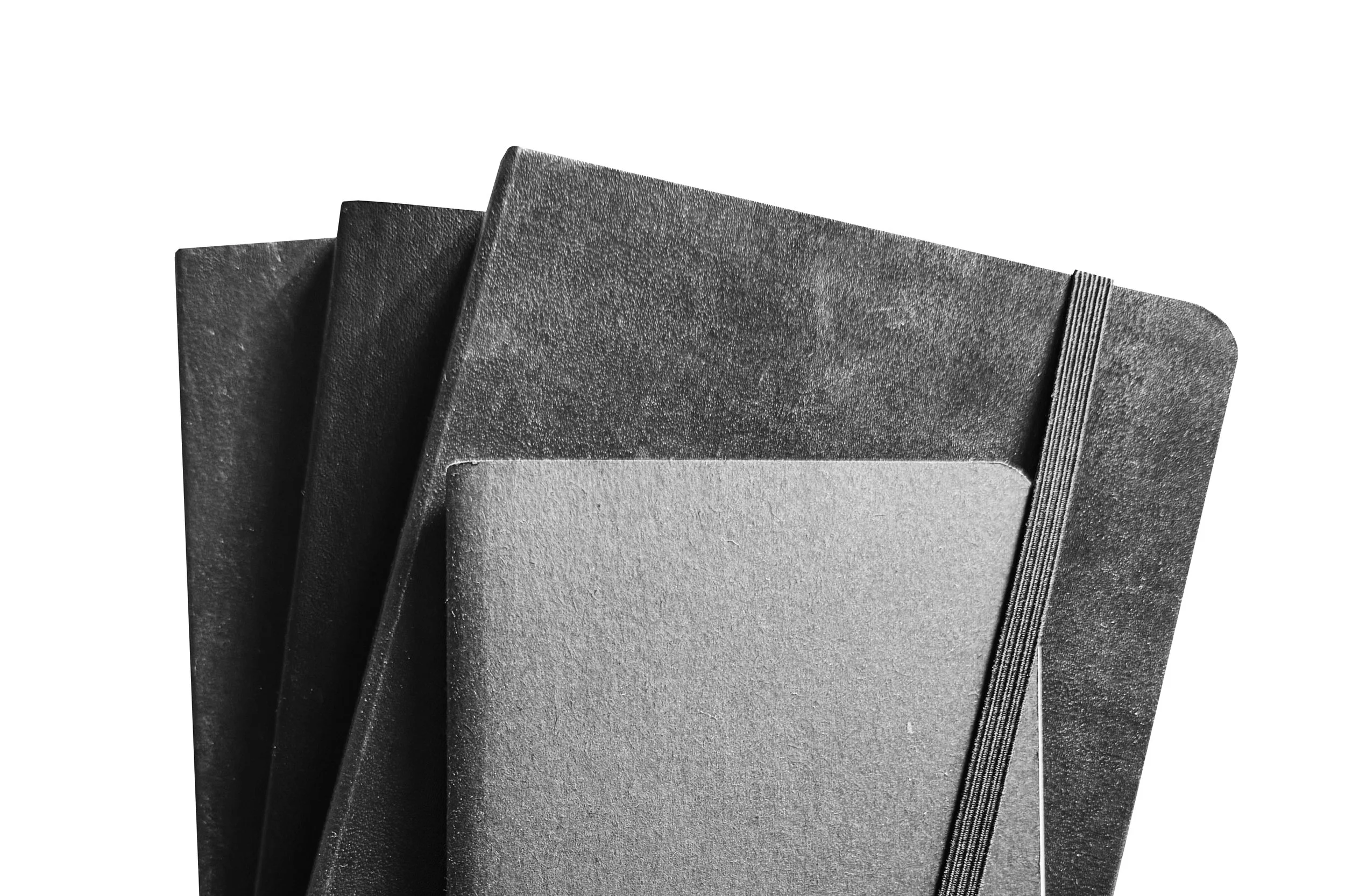
Some of my sketchbooks
That is exactly what I find so fascinating about Urban Sketching. The movement itself is inspiring and the sense of community is incredibly valuable. But at the end of the day drawing is still the most important part.
I first came across Urban Sketching in the late 2000s. I immediately loved the idea of keeping a visual journal where I could document my life from my own perspective inside a sketchbook.
Photography was already becoming an important part of everyday life back then. But the thought of recording my experiences with nothing more than a pen and a piece of paper felt much more meaningful to me. It still does today.
What Is Urban Sketching?
Urban Sketching is the practice of drawing on location from direct observation. Instead of creating an image from a photograph or entirely from imagination, the artist responds to a real place and a specific moment.
A street corner, a train station, a café, a local market or someone going about their daily routine can all become the subject of a sketch.
The goal is not necessarily to create a perfect drawing. Instead Urban Sketching is about capturing the atmosphere, the character and the story of a place.
Every sketch becomes a visual memory.
That personal connection is what makes a drawing so different from a photograph. A camera records a single moment. A drawing interprets it and turns it into something deeply personal. Looking back, the moments I spent sketching on location are the ones I remember most vividly.
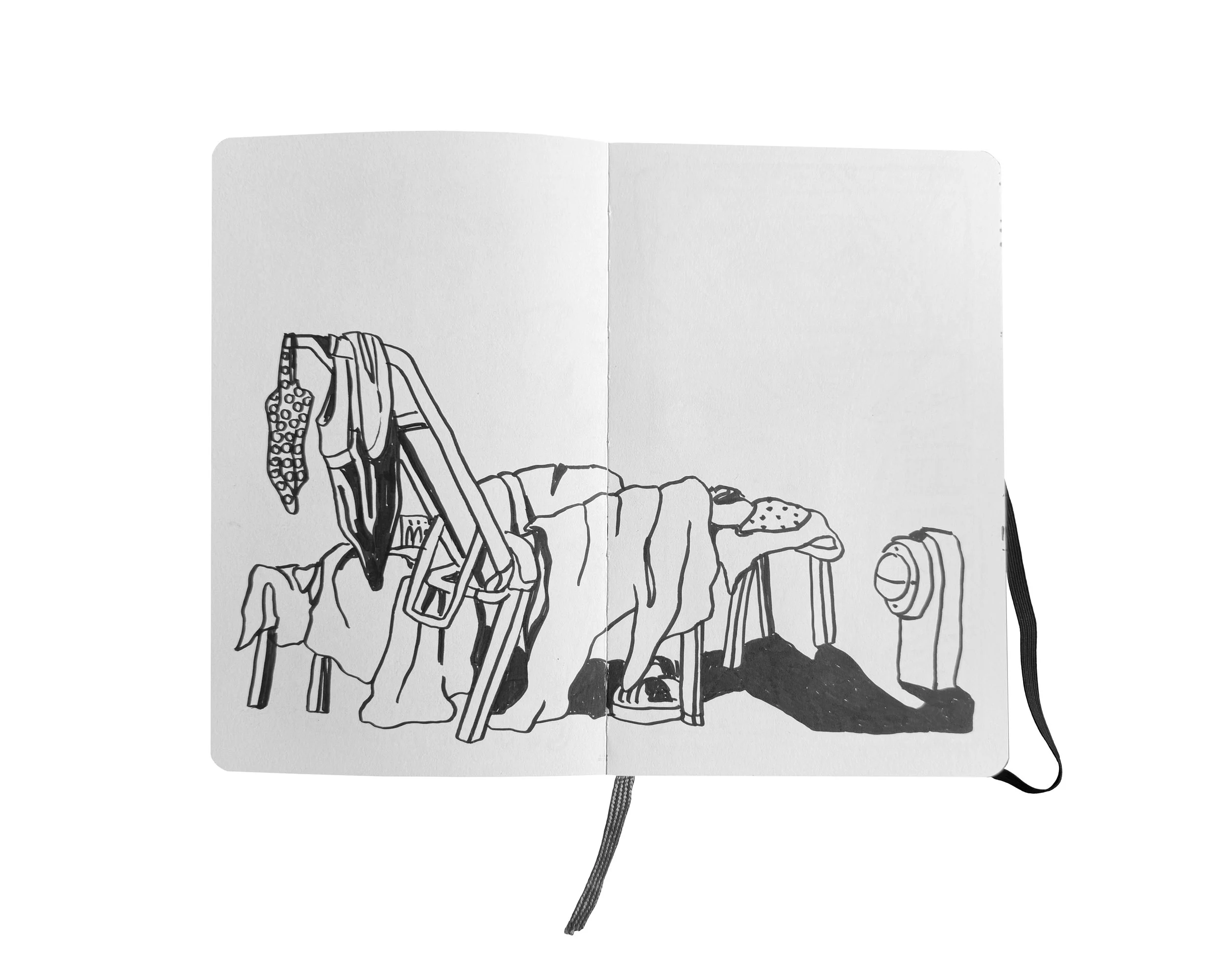
One of my few sketches on paper, as I now mostly draw and create my sketches on my iPad Mini.
The Urban Sketchers Manifesto
The worldwide Urban Sketchers movement was founded in 2007 by journalist and illustrator Gabriel Campanario. His vision was simple: bring together people who document the world around them through drawing and encourage them to share their unique perspectives.
The core ideas of the movement are summarized in the Urban Sketchers Manifesto:
We draw on location, indoors or out, capturing what we see from direct observation.
Our drawings tell the story of our surroundings, the places we live and where we travel.
Our drawings are a record of time and place.
We are truthful to the scenes we witness.
We use any kind of media and cherish our individual styles.
We support each other and draw together.
We share our drawings online.
We show the world, one drawing at a time.
The manifesto has created something truly special. It has built a global community where artists inspire one another and celebrate the beauty of everyday observation.
At the same time I think it is important to remember that a manifesto should be an invitation rather than a limitation.
Rules and principles can bring people together and provide guidance. They should never make artists feel that their work is somehow less valuable because it does not follow a particular set of guidelines.
And if you happen to take a photo and use it later as a reference for a drawing, I honestly do not see anything wrong with that. I do it myself often enough.
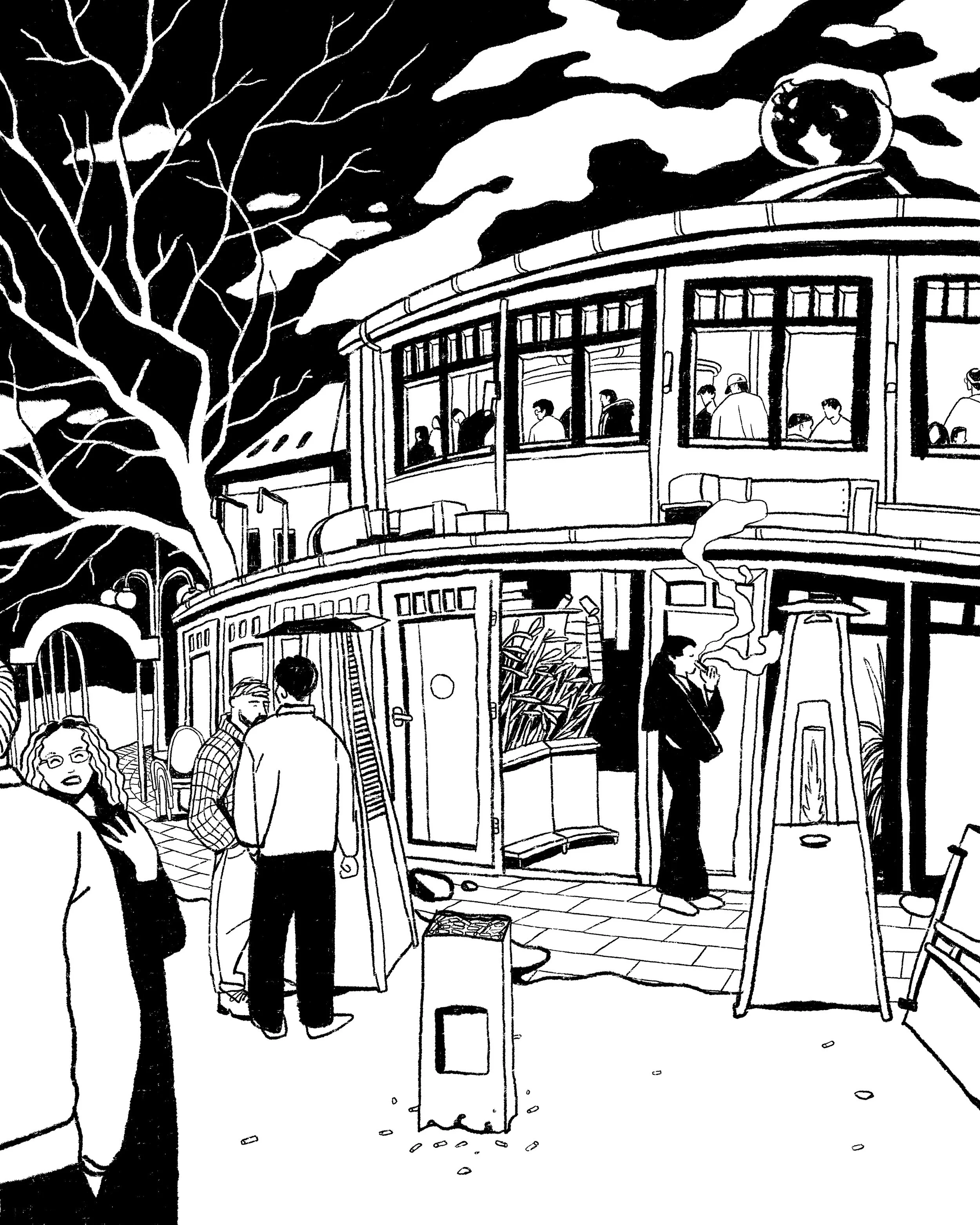
This is one of those moments that I could only capture with my camera and later turned into a drawing.
Urban Sketching Has Always Existed. We Just Gave It a Name.
One of the things I find most interesting about Urban Sketching is that the practice itself is not new.
Artists have always carried sketchbooks with them. They have always drawn buildings, people, landscapes and the ordinary moments of everyday life.
The difference today is that we have a name for it. We also have a community and a shared identity built around this way of drawing.
I think that is a good thing. Communities can motivate us, connect artists from around the world and encourage conversations that help everyone grow.
But in the end Urban Sketching is not about belonging to a particular group or following a strict set of rules.
It is about staying curious and learning to look more closely.
Why Urban Sketching Is So Valuable for Illustrators
For professional illustrators Urban Sketching is one of the best ways to develop observation skills and strengthen visual storytelling.
Illustration is about far more than technical ability. It is about interpretation and making thoughtful decisions.
When you draw on location you cannot control everything. People move. The light changes. Interesting moments disappear before your sketch is finished.
Those limitations are exactly what make the practice so valuable.
What is the story of this place?
Which shapes create the right atmosphere?
Which details are essential?
What can be simplified?
These are the same questions illustrators ask themselves when working on professional projects.
Strong illustrations rarely come from showing everything. They come from choosing the right elements and leaving enough room for the viewer's imagination.
Urban Sketching trains exactly that skill.
Developing Your Illustration Style Through Observation
Many artists spend a lot of time searching for their own unique style.
They experiment with different techniques, materials and visual approaches. But a personal style does not simply appear by inventing something completely new. It develops through repetition, practice and careful observation.
The more closely we look at the world around us, the more visual experiences we collect. Over time these impressions become part of our own visual language.
Through Urban Sketching we start noticing things we might otherwise overlook:
interesting shapes in architecture
unique movements and body language of people
unexpected color combinations
patterns and textures hidden in everyday life
All of these observations become part of the way we see and create.
A sketchbook is therefore much more than a collection of drawings. It becomes a collection of ideas, memories and discoveries that can later find their way into illustrations, editorial projects or personal artwork.
Many of the things we observe while sketching may not immediately become useful. But months or even years later they can return as inspiration for a new illustration.
The more we fill our visual memory the richer our creative possibilities become.
The Beauty of Imperfection
One of the most valuable lessons Urban Sketching teaches us is how to deal with mistakes.
In a digital world where images can be edited, corrected and perfected endlessly, drawing on location offers a completely different experience.
A line can be slightly inaccurate. A perspective can be wrong. A person can move before you have finished capturing them.
And that is exactly what gives a sketch its character.
A drawing is not only about the final result. It also contains the moment, the process and the personal experience behind it.
For professional artists this is an important reminder: not every drawing has to become a finished piece of artwork.
Some drawings are research.
Some are experiments.
Some are simply a way to understand the world a little better.
There is a special honesty in sketches that show the decisions, mistakes and observations of the artist. They reveal a way of seeing rather than just presenting a polished final image.
Urban Sketching Without Pressure
The longer I draw, the more I believe that the most important part of any creative practice is simply to continue.
Techniques, communities and guidelines can be incredibly helpful. They can inspire us, give us direction and help us improve.
But they should never become a reason not to draw.
You do not need the perfect sketchbook.
You do not need the perfect location.
You do not need to wait until you feel ready.
You simply need to begin.
I have wasted far too much time chasing the wrong kind of perfection. Instead of drawing I sometimes ended up doing nothing because I wanted everything to be perfect from the beginning.
I wanted the perfect idea, the perfect moment and the perfect result.
Unfortunately this still happens to me sometimes today, even though I write about these topics and understand these lessons myself.
Maybe that is exactly why Urban Sketching fascinates me so much. Maybe that is also why I often feel a little jealous when I see people with sketchbooks completely filled with drawings.
They remind me of something I already know but sometimes forget: the most important thing is not creating the perfect drawing.
The most important thing is creating.
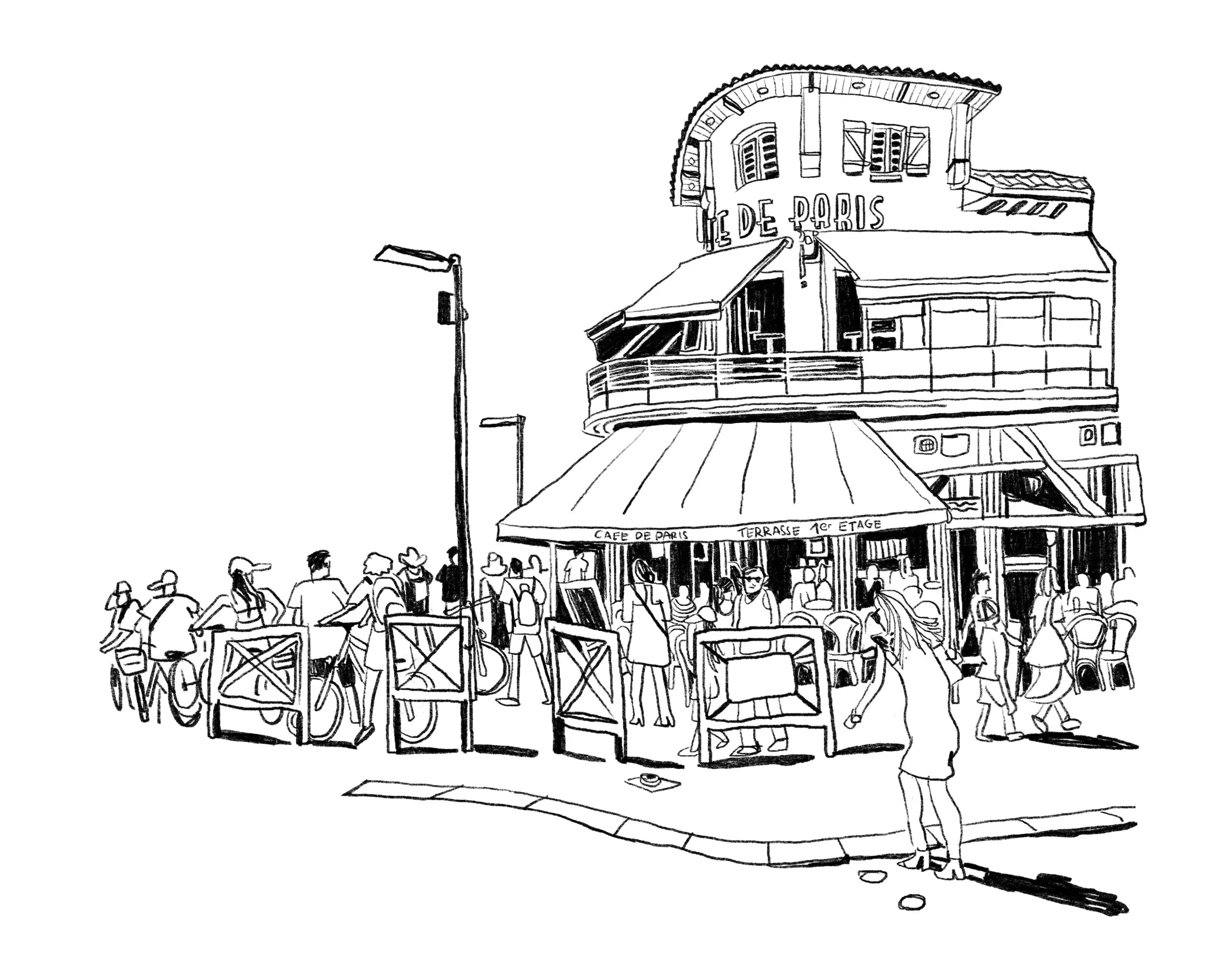
Cafe de Paris, Hossegor, 2022
Why Urban Sketching Still Matters
In a world filled with endless images, constant notifications and never-ending distractions, drawing forces us to slow down.
It teaches us not just to look but to truly observe.
That ability is at the heart of professional illustration. The better we understand the world around us, the better we can communicate ideas, emotions and stories through images.
Urban Sketching reminds us that every place has a story and every moment has the potential to become a drawing.
A simple street corner can become a memory.
A quiet café can become a personal story.
A few lines in a sketchbook can preserve a moment that would otherwise disappear.
A sketch does not have to be perfect.
It only has to show that you were truly paying attention.
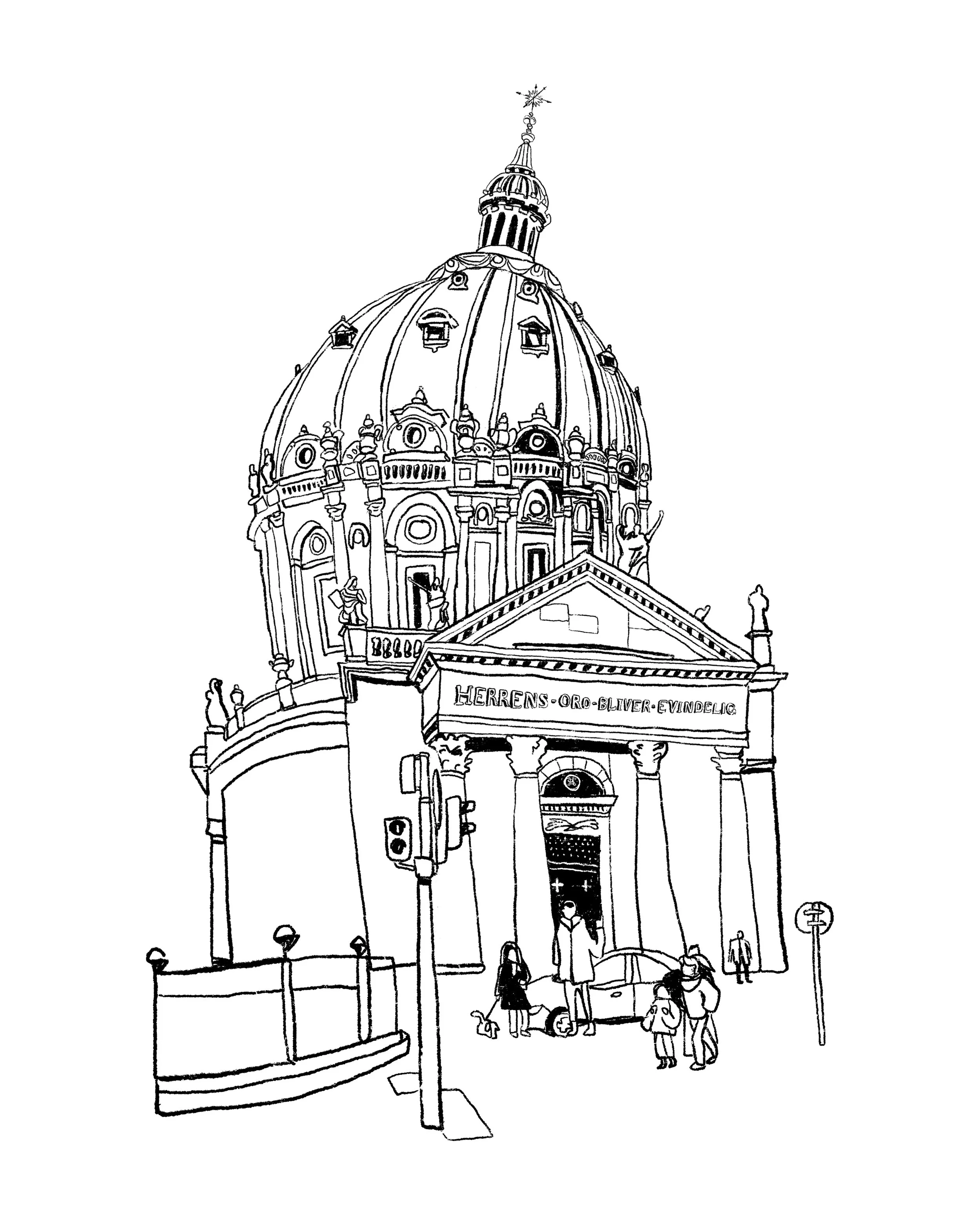
Quick sketches from Oslo, 2025