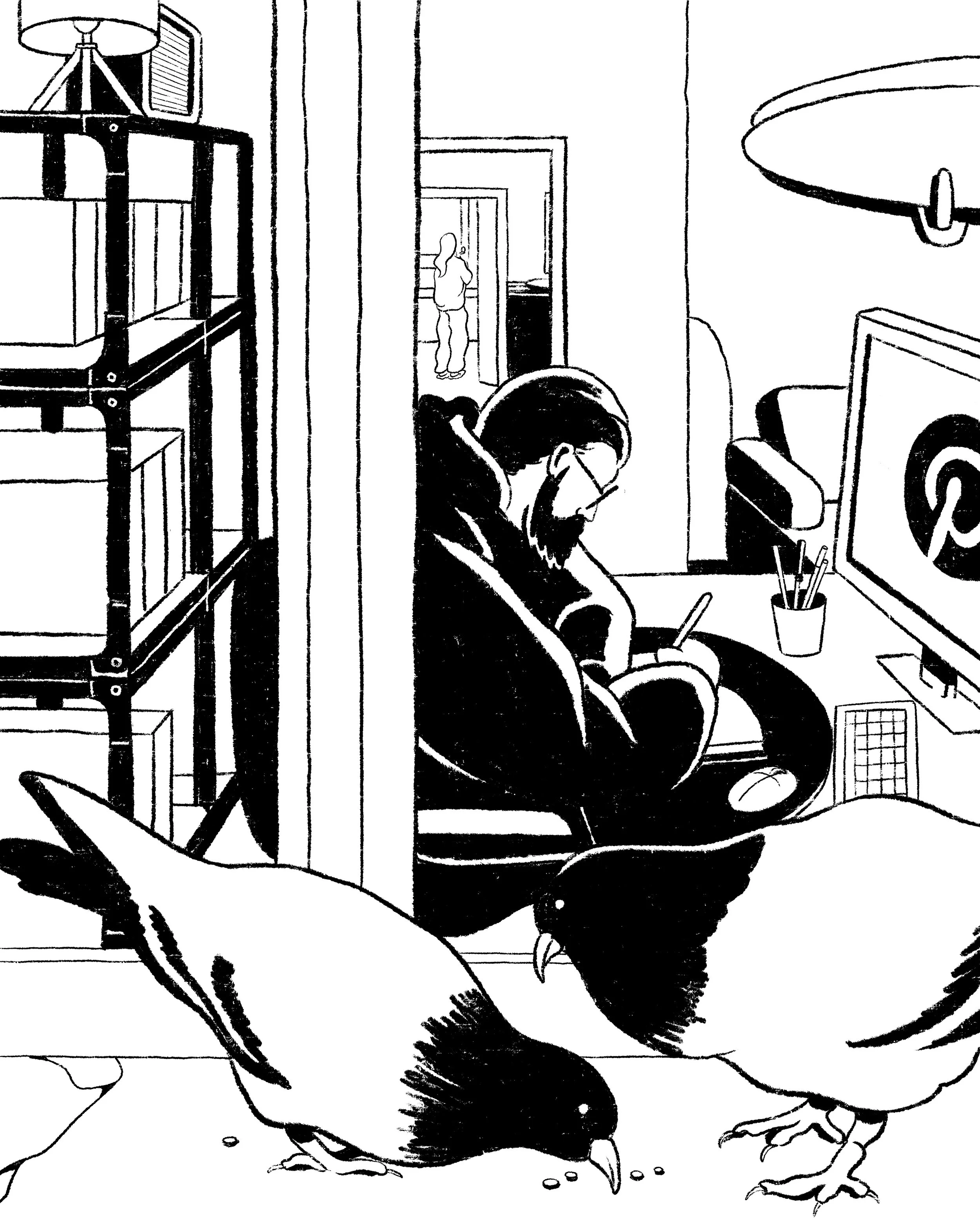
As an artist, there are already more than enough platforms you could be using. Instagram, TikTok, your own website, maybe a newsletter and then there is Pinterest. At some point, you have to ask yourself whether adding another platform is actually worth the time. I asked myself exactly that question when I started using Pinterest more seriously.
My main reason for trying it was pretty simple. I wanted to find another way to get my illustrations and my website in front of people without being completely dependent on Instagram. I have used Instagram for a long time and I still think it can be incredibly valuable for artists, but the way content works there can also be frustrating. You spend hours or even days creating something, post it and a few days later it has basically disappeared from people’s feeds.
Pinterest promised something different. After using it for a while, I think it can definitely be worth it for artists, but you have to approach it with very different expectations.
Pinterest Doesn’t Really Feel Like Social Media
One of the biggest differences I’ve noticed is that Pinterest doesn’t really feel like a traditional social media platform. On Instagram, everything revolves around followers, engagement and building an audience around yourself. Pinterest feels much closer to a visual search engine.
People might not be searching for a specific artist. Instead, they are searching for things like drawing ideas, editorial illustration, urban sketching, sketchbook inspiration or ways to improve their drawing skills. If one of your images happens to match what they are looking for, they can discover your work without ever having heard your name before.
I actually really like that idea. On Instagram, my goal is usually to make someone interested enough in my work that they follow me and hopefully come back for future posts. With Pinterest, I’m much more interested in getting someone to click on an image and visit my website or one of my blog articles. Pinterest followers themselves aren’t particularly important to me.
The Biggest Advantage Is How Long Your Work Can Live
This is probably the part of Pinterest that interests me most as an artist. Illustrators usually have enormous archives of work. There are finished commissions, personal illustrations, sketches, experiments and drawings that we created years ago but rarely show anymore.
On Instagram, there isn’t much reason to suddenly post an illustration from three years ago unless you actively decide to bring it back. Pinterest works differently because the age of an image isn’t necessarily important. If someone is searching for something that matches your illustration, they can still find it.
I really like the idea that an illustration doesn’t have to become irrelevant just because I posted it once. Something I created years ago can suddenly become useful again and potentially lead someone to my portfolio today. In that sense, Pinterest feels much more like building an archive than maintaining a feed.
But Pinterest Is Slow
This is also where I think expectations are extremely important. Pinterest hasn’t felt like a platform where you upload a few images and suddenly get huge amounts of traffic. Especially in the beginning, it can actually feel pretty slow.
You might start seeing impressions while the number of people actually clicking through to your website remains relatively small. At first, that can be disappointing because thousands of impressions sound impressive until you realise that only a small percentage of those people are leaving Pinterest.
But I’m starting to think that judging Pinterest after only a few weeks or months doesn’t make much sense. I’m much more interested in what happens when the account has been active for six months, a year or even longer. If older Pins continue to be discovered while new ones are constantly being added, the effect could compound over time.
That’s very different from how I normally think about Instagram. With Instagram, I often know fairly quickly whether a post is performing well. Pinterest feels more like planting lots of small seeds without knowing exactly which ones will eventually grow.
And that brings up a bigger question: How much should we actually depend on platforms like Instagram and Pinterest as artists? I’ve explored this in another article: Do Artists Need Social Media to Be Successful?
Pinterest Makes Much More Sense When You Have a Website
For me personally, Pinterest becomes much more interesting in combination with my blog. I don’t just want people to look at my illustrations on Pinterest. Ideally, I want them to continue to my own website.
Whenever I write an article about drawing, illustration, social media for artists or something I’ve learned during my career, I can create multiple Pins that lead back to that article. Those Pins don’t all have to look the same either. One article can be promoted through a finished illustration, a sketch, a detail from an artwork or a graphic containing the headline.
That means one blog article can create many different entry points into my website. I think this is where Pinterest starts becoming genuinely powerful. Instead of thinking of it as another account that needs content every day, I see it more as an extension of my website.
Pinterest and Google Can Work Together
Another reason I’m interested in Pinterest is that I’m currently trying to grow my website through Google as well. SEO takes time, especially with a relatively new blog. You can publish a good article and still wait weeks or months before Google starts showing it for more search queries.
Pinterest gives me another way of getting those articles discovered while that process is happening. Someone might find the same article through Google eventually, but they could also discover one of my illustrations on Pinterest and arrive on the website that way.
I don’t think artists should look at this as Pinterest versus Google. Ideally, they complement each other. Google can become a source of long-term search traffic while Pinterest creates another stream of visitors through visual discovery. For artists in particular, that combination makes a lot of sense because images are already at the centre of what we do.
Artists Already Have a Huge Pinterest Advantage
One thing I didn’t fully appreciate before starting is that artists already have exactly what Pinterest needs: a lot of visual content.
If you run a website about finance or another less visual topic, you might have to constantly design graphics specifically for Pinterest. As an illustrator, I already have hundreds of images that could potentially become Pins. I don’t have to create a new illustration every time I want to post something.
One finished artwork can also become several different Pins. You can use the complete illustration, crop an interesting detail, show the sketch next to the finished piece or combine several related drawings. Suddenly an archive that has been sitting on your hard drive for years becomes useful again.
This is one of the reasons I think Pinterest is particularly interesting for illustrators, designers and other visual creatives. Most of the difficult part, creating something worth looking at, has already been done.
Not Every Pin Is Going to Work
Something else I’ve noticed is how differently individual Pins can perform. Some images receive significantly more impressions than others and sometimes it isn’t immediately obvious why.
I think that’s another reason why Pinterest probably works better when you stop focusing too much on individual posts. If you only have 20 Pins online, there aren’t many opportunities for someone to discover your work. If you eventually have hundreds of Pins pointing toward different articles, projects and portfolio pages, the situation becomes completely different.
I like to think of every Pin as another small doorway into my website. Most of those doors might only get used occasionally. Some might barely get used at all. But if you build enough of them and a few start receiving consistent traffic, they can collectively become valuable.
This also takes some of the pressure away. Not every image needs to perform.
So, Is Pinterest Actually Worth It for Artists?
At the moment, my answer is yes, but with an important condition: I wouldn’t start Pinterest if you’re looking for immediate results.
If you want interaction, comments, likes and the feeling that people are actively following what you’re doing, Instagram is probably much more rewarding. Pinterest feels quieter and much less personal. But that’s also exactly what makes it interesting to me.
I’m not trying to build another social media following there. I’m trying to build another way for people to discover my work.
I also don’t expect Pinterest to suddenly transform my website traffic after one or two months. What interests me is what happens if I continue doing this for a year. If I keep publishing articles, adding illustrations and creating Pins, I’ll gradually have hundreds of different images circulating on the platform and pointing back to my website.
As artists, we already spend an enormous amount of time creating images. Most of them get posted once and then slowly disappear into our archives. Pinterest gives those images another purpose.
And if an illustration I created years ago can still bring someone to my work months or even years from now, I think that’s worth experimenting with.

Looking for tools to support your creative journey? Check out my Tools & Resources page for the equipment and materials I use and recommend.