Learning to Draw Is Like Learning a New Language
Learning to draw can sometimes feel overwhelming. There seem to be endless things to understand: perspective, proportions, light, shadows, anatomy and composition. When you look at the work of experienced artists, it can easily seem as if they simply know how to draw everything. However, I think there is a much simpler and more helpful way to think about learning to draw: drawing is like learning a new language.
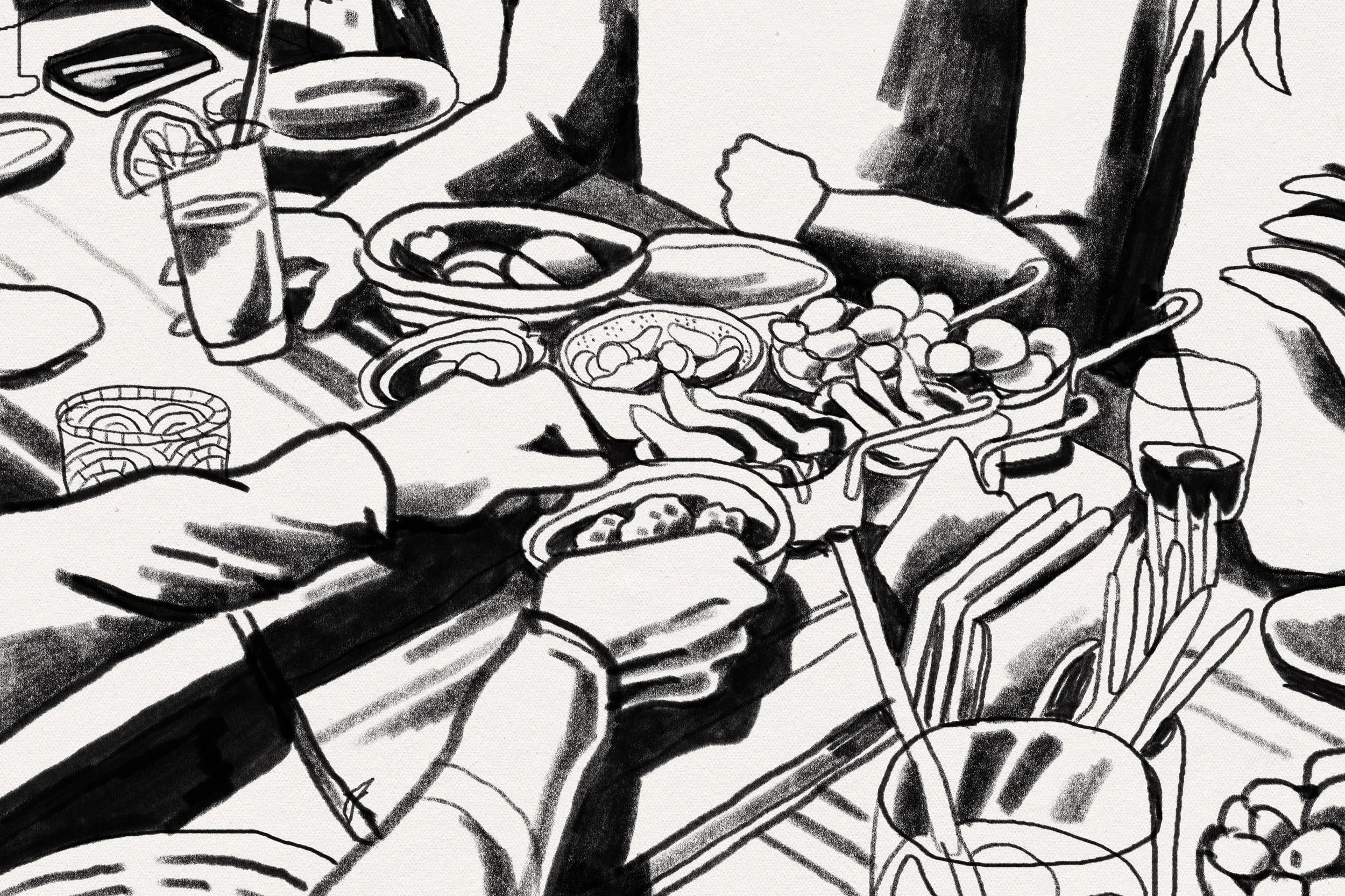
Especially everyday situations can help you better understand simple objects and shapes by encouraging you to observe and draw the familiar things around you.
When you learn a language, you do not start by writing a perfect novel. You begin with individual words. Over time, your vocabulary grows and you start understanding more and more. Eventually, you can connect words, form sentences and express yourself more freely. Drawing works in a very similar way. You can think of everything you draw as a new word in a visual language.
The first time you draw a hand can be difficult. You have to carefully observe how the fingers are constructed, how the proportions work and which shapes make up the hand. When you draw another hand later, that knowledge has not disappeared. You already recognise certain shapes and connections and can focus on new details. The same applies to faces, people, trees, buildings, cars and animals. Every time you observe and draw something, you learn something new and expand your visual vocabulary. Over time, you no longer have to start completely from scratch with every subject because you already have knowledge you can draw upon.
Of course, you do not need to know how to draw everything. Nobody knows every word in a language and you do not need to know how to draw every possible subject either. Maybe you are comfortable drawing people but struggle with architecture. Perhaps you enjoy drawing buildings while faces feel much more difficult. That is completely normal. When you come across something you cannot draw yet, it does not mean you are bad at drawing. You simply have not learned that particular visual word yet.
That is also where references can become incredibly valuable. I like to think of references as dictionaries. When you are learning a language, you look up words you do not know. Nobody expects you to memorise every word before you are allowed to start speaking or writing. Why should drawing be any different? References help you understand new things. They show you shapes, details, perspectives and proportions. The goal is not simply to copy what you see as accurately as possible. It is much more interesting to understand why something looks the way it does.
One experience from my time at university made this idea particularly clear to me in retrospect. I was once given an assignment that I honestly did not understand at first. Within one month, I was supposed to draw several thousand objects from my apartment. The task was not simply about drawing every object once. Many things had to be drawn again and again. Pens, books, glasses, cutlery and countless other everyday objects appeared repeatedly in my drawings.
At the time, I often wondered why I was supposed to draw the same things over and over again. Today, I understand the purpose of that exercise very clearly. Through constant observation and repetition, I expanded my visual vocabulary enormously. I learned to recognise shapes more quickly and developed a much better understanding of how everyday objects are constructed. Eventually, I no longer had to discover everything from the beginning because I already understood the basic structure of many of these things.
This is where repetition becomes so important. Learning a new word once does not mean you will remember it forever. You need to hear it, read it and use it repeatedly. Drawing works in exactly the same way. You might feel like you understand a particular subject today and struggle with it again a week later. That does not mean you have forgotten everything. It simply means you need more repetition.
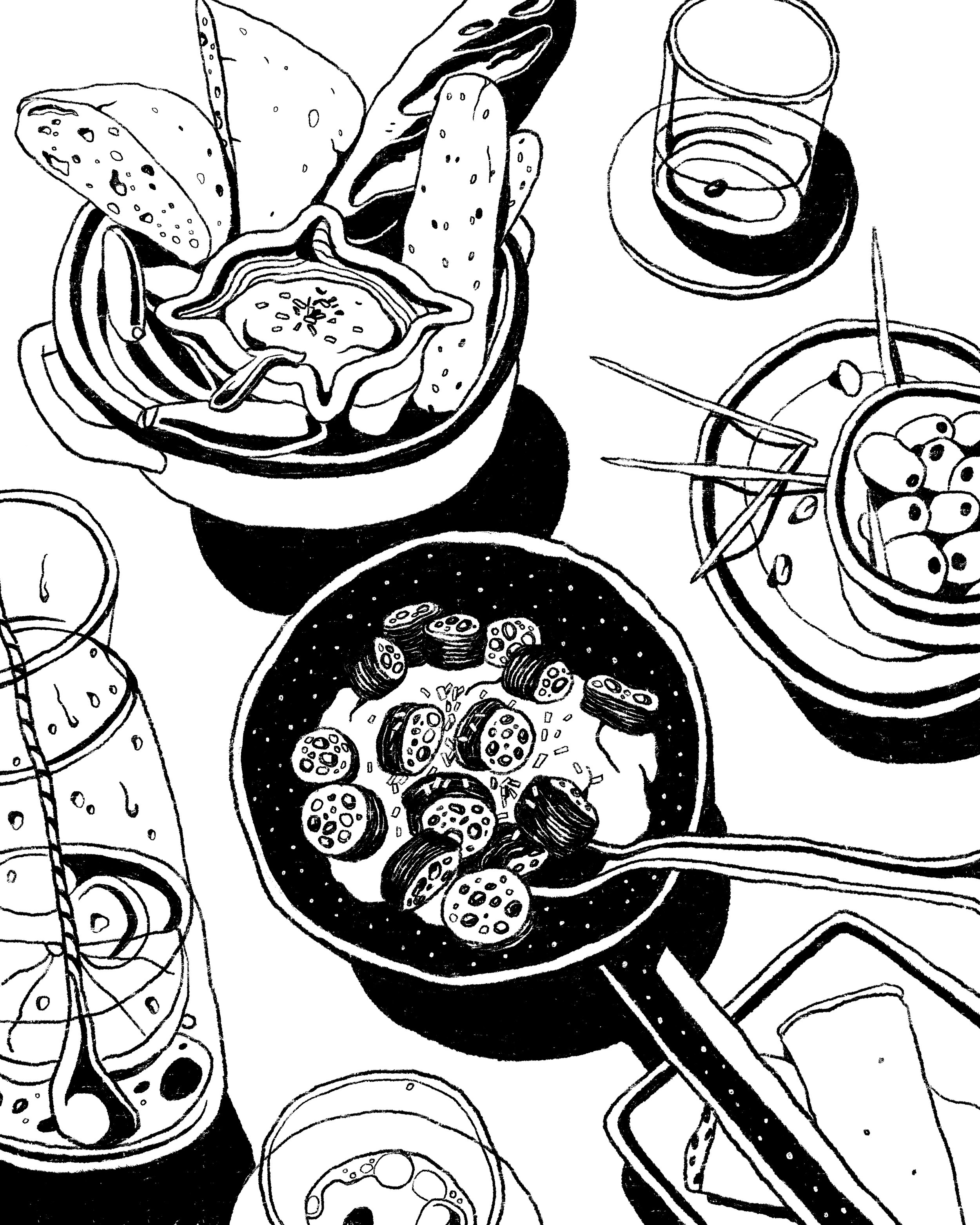
I have always enjoyed drawing things that sit on tables, especially food. I love food, but I have also drawn these objects so often that they have become part of my visual vocabulary and are now much easier for me to draw.
This is why drawing the same things again and again can be incredibly helpful. Every drawing gives you a little more understanding. Over time, you begin to recognise shapes faster and spend less time thinking about how something is constructed. Regular drawing helps you build and strengthen your visual vocabulary. And this does not always require a large or perfect drawing. Even a small sketch can teach you something new.
The most exciting moment comes when you begin connecting all these individual visual words. You have learned how to draw people, buildings, cars, trees and different objects. Suddenly, you can combine these elements and create an entirely new scene. This is where drawing starts to become a language of its own. You are no longer only copying what you see in front of you. You can use your visual vocabulary to express your own ideas.
Just like spoken language, everyone eventually develops their own way of expressing themselves. Two people can know the same words and still tell completely different stories. Two artists can draw the same subject and create completely different images.
So the next time you sit in front of something and think that you cannot draw it, try looking at it differently. You are not necessarily bad at drawing it. You simply have not learned that visual word yet. Take your time, look closely, draw it more than once and continue building your visual vocabulary step by step. The more visual words you learn, the more freely you can express yourself. And eventually, you may realise that your pencil has become a way of speaking a language that is entirely your own.
Want to improve your drawing skills even further? Read my article Drawing Hands: What Really Mattersfor more insights into drawing one of the most challenging and fascinating parts of the human body.