Drawing What You See, Not What You Think You See
For me drawing always begins in the mind before it ever reaches the paper.
I often catch myself stumbling because I’m seeing what I think I see, rather than what’s actually there.
So I take a moment, slow down, and really look again. Noticing the details I might have missed at first.
You probably know this moment: you’re drawing from a reference and somehow, the result just doesn’t quite match what you’re seeing.
That’s completely normal. Most of the time, it’s not about lacking skill. It’s more about how our mind quietly interferes. We stop seeing what’s actually there and start drawing what we think we see.
When I was a child, I always believed that drawing required an exceptionally steady hand. I never thought that everything really happens in your mind. Looking back now as an adult, it’s obvious that the hand doesn’t think, but somehow, I still make the same mistakes over and over.
Perspective, light and especially shadow can be surprisingly deceptive. This becomes really clear with portraits: even if all the proportions are correct—the head shape, the distance between the eyes, the width of the mouth—the person can still feel “off.”
Often, it comes down to small differences in how shadows are placed.
That’s why it helps to slow down and take a moment to really look. No pressure, no overthinking, just observe.
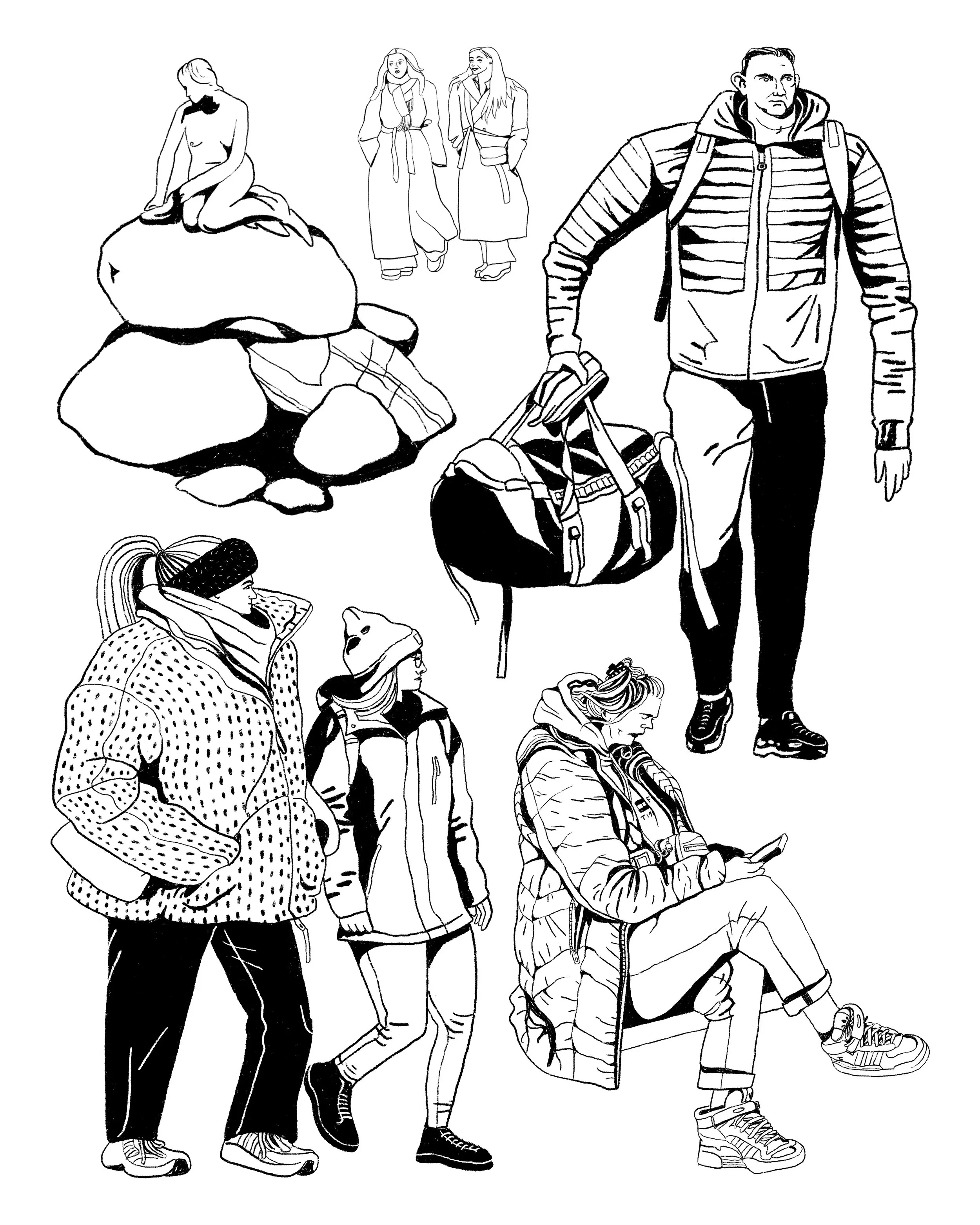
For example, we often imagine the eyes as clearly defined shapes. But in reality, the transitions are usually much softer, especially around the upper eyelid where shadows blend gently into the form. If those soft edges are drawn too harshly, it can immediately change the entire expression.
Try to trust your eye a little more, and quiet your thoughts for a moment.
And if you’re not happy with your result, don’t be too hard on yourself. Maybe it wasn’t your drawing, it might just have been your perception playing a small trick on you. And that’s exactly where the learning happens.